
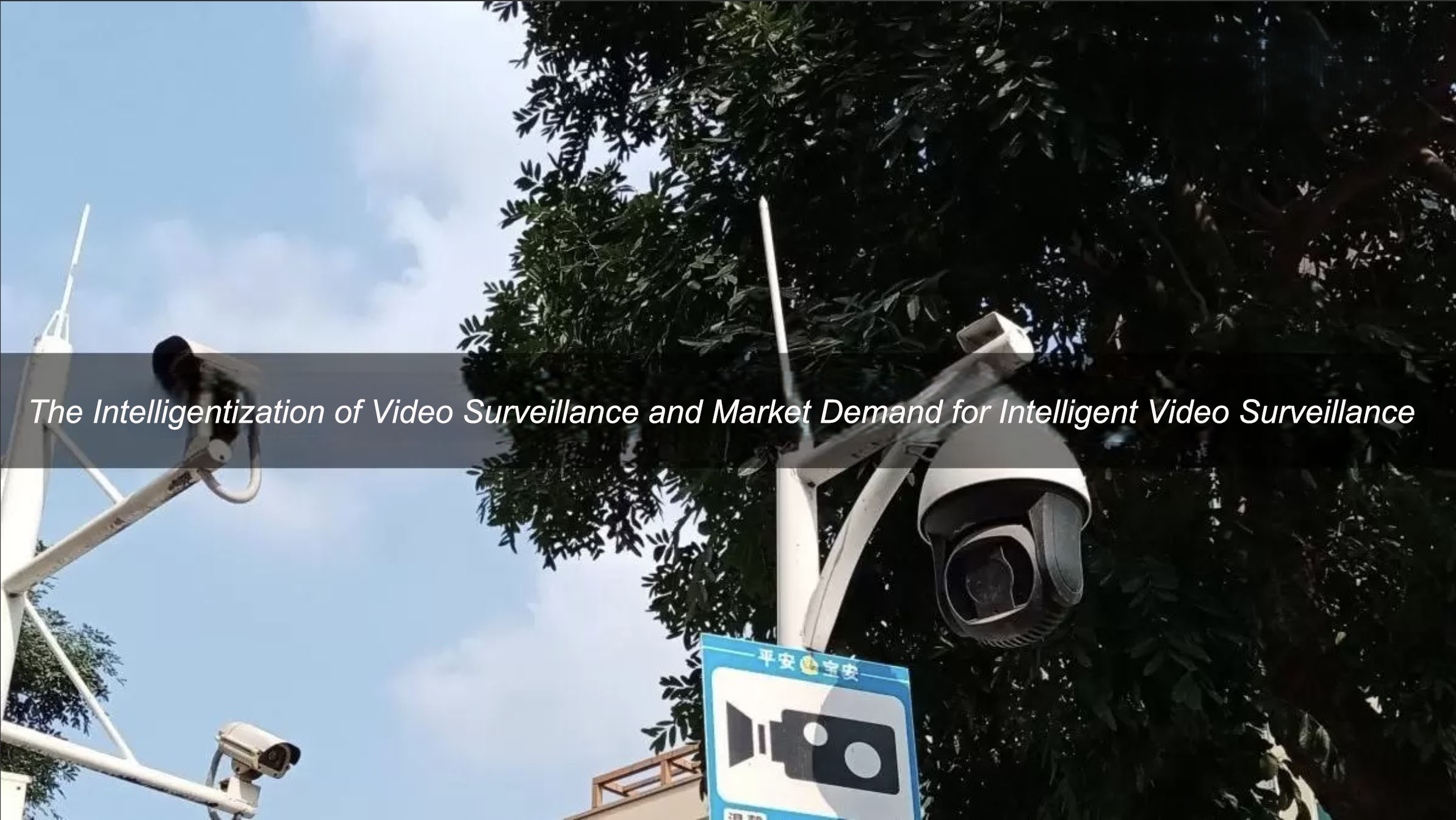
An overview of how intelligent video surveillance combines AI, image processing, computer vision, and network video systems to improve real-time security, reduce false alarms, and support smarter decision-making.
Intelligent video surveillance is developed on the basis of digital and network-based video monitoring.
It integrates knowledge from multiple fields, including:
- Pattern recognition
- Image processing
- Computer vision
- Artificial intelligence
- Video information analysis
- With these technologies, intelligent video surveillance systems can identify different objects, detect abnormal events in monitoring scenes, and send alarms or useful information in a faster and more effective way.
- This allows security personnel to respond to incidents more efficiently while reducing false alarms and missed alarms.
1. What Is Intelligent Video Surveillance?
- Traditional video surveillance systems often rely on human operators to review video footage after an incident has already happened.
- Intelligent video surveillance changes this passive model.
- Instead of only recording video for later investigation, intelligent systems can analyze, track, and identify monitored objects in real time. When an abnormal event occurs, the system can immediately issue alerts and report useful information.
- This gives video surveillance a more active role.
- It helps government departments, security organizations, and public safety teams make faster decisions and take correct action in time.
- In this sense, intelligent video surveillance turns monitoring from a simple recording tool into a real-time security decision-support system.
2. Market Demand for Intelligent Video Surveillance
- Security has become a serious global issue.
- The global wave of anti-terrorism, especially after the September 11 attacks, greatly changed the global security equipment market. It also directly increased the demand for related security products.
- In the past few years, one of the biggest changes in the video surveillance market has been the wide application of digital and network technologies.
- With the rapid improvement of:
- Network bandwidth
- Computer processing power
- Storage capacity
- Video information processing technology
- fully digital and network-based video surveillance systems have become increasingly advantageous.
- These developments have created broader opportunities for the security industry. New application models and market opportunities continue to appear.
- Intelligent video surveillance is one of the most advanced application models in the field of network video surveillance.
3. Why Large-Scale Surveillance Needs Intelligence
- The emergence of intelligent video surveillance systems is closely related to the operation of large-scale monitoring systems.
- In large security projects, operators may need to manage and monitor hundreds or even thousands of cameras. It is almost impossible for human staff to watch every camera feed effectively at all times.
- As a result, traditional monitoring systems may lose part of their preventive and active intervention functions.
- If the system can automatically recognize and analyze information contained in video images, its performance will be greatly improved.
- This is the core value of intelligent video surveillance.
- Early intelligent video surveillance systems mainly included built-in motion detection and alarm functions. Later, more advanced intelligent functions gradually appeared.
- For example, intelligent transportation systems require technologies such as:
- Moving target traffic statistics
- License plate recognition
- Vehicle tracking
- Abnormal traffic event detection
- These needs have further promoted the development of intelligent video technologies.
4. Perimeter Protection and Intelligent Tracking
- Intelligent video surveillance systems can detect moving targets entering a designated area in time. Because of this, they can provide perimeter protection functions.
- For example, if a person or vehicle enters a restricted area, the system can automatically detect the intrusion and trigger an alarm.
- Intelligent tracking is another important application.
- With intelligent tracking technology, an intruder can be automatically displayed on multiple screens. The system can also track the target from one camera to another.
- The tracked target may be:
- A vehicle
- A moving object
- An abandoned object
- An intruder
- Other abnormal targets
- The system can also provide alarm management functions, helping security personnel identify and respond to events more efficiently.
5. From Post-Event Investigation to Crime Prevention
- Video surveillance systems are no longer only seen as tools for searching for suspects after a crime has occurred.
- Today, they are increasingly regarded as auxiliary tools for preventing crime.
- This change is mainly achieved through intelligent video analysis.
- Many recognition technologies are based on intelligent video analysis, including:
- License plate recognition
- Face recognition
- Object recognition
- Behavior analysis
- Abnormal event detection
- For example, face recognition technology is implemented on the basis of video analysis technology.
- An intelligent video surveillance system can process every face image captured by cameras, extract facial features, and compare them with records in a database.
- If the comparison is successful, the system can quickly extract the current location and related information of the suspect, then notify the police or security department.
6. Intelligent Algorithms in Front-End Devices
- More intelligent algorithms, such as license plate recognition and face recognition, are gradually being embedded into front-end monitoring devices.
- These devices include:
- Cameras
- Video servers
- Storage devices
- Intelligent edge devices
- With intelligence built into front-end devices, the system can determine when important events or targets appear.
- The device does not need to transmit all video continuously. Instead, it can transmit video only when relevant content appears.
- This can help:
- Save bandwidth
- Improve storage efficiency
- Enable intelligent storage
- Reduce unnecessary video transmission
- Improve system response speed
- These applications are driving the continued development of intelligent video surveillance technology.
7. Main Applications of Intelligent Video Surveillance
- In recent years, intelligent video surveillance has been widely used mainly in two fields:
- Intelligent security
- Intelligent transportation
- These areas have relatively mature technology applications and products.
8. Intelligent Security Applications
- Intelligent security helps government agencies and other security departments improve public safety in large outdoor areas.
- It is an important auxiliary tool for preventing terrorist attacks and handling emergencies.
- Intelligent security applications can be divided into two main categories:
- Special security scenarios
- Public security scenarios
Special Security Scenarios
- Special security scenarios usually refer to important locations in national and economic fields, such as:
- Bank vaults
- Important financial facilities
- Key infrastructure sites
- High-security restricted areas
- In these scenarios, intelligent video surveillance can help detect suspicious people, suspicious objects, intrusion behaviors, and abnormal movements.
Public Security Scenarios
- Public security scenarios include locations such as:
- Airports
- Railway stations
- Stadiums
- Public squares
- Transportation hubs
- Large event venues
- The main purpose is to prevent abnormal incidents and improve public safety.
- In these environments, intelligent video surveillance can provide functions such as:
- Suspicious person detection
- Suspicious object detection
- Target tracking
- Vehicle recognition
- Face recognition
- Alarm reporting
- Identity confirmation of people and objects
- These functions help security teams respond faster and reduce potential risks.
9. Conclusion
- Intelligent video surveillance is an important development direction in the security industry.
- By combining digital video monitoring, network transmission, computer vision, image processing, and artificial intelligence, intelligent surveillance systems can move beyond traditional video recording.
- They can analyze video in real time, detect abnormal events, identify targets, support alarm management, and help security personnel make faster decisions.
- As video surveillance systems continue to become more digital, networked, and intelligent, intelligent video analysis will play an increasingly important role in public safety, perimeter protection, smart transportation, and security management.
For security projects, intelligent video surveillance is no longer just an advanced feature. It is becoming an important tool for improving efficiency, reducing false alarms, saving bandwidth, and strengthening real-time security response.